


Hey there! As a supplier of straight line razor wire, I've seen firsthand how weather can have a real impact on this stuff. In this blog, I'm gonna break down how different weather conditions can affect straight line razor wire and what you need to know to keep it in top shape.
Sun and Heat
Let's start with the sun and heat. You know, when it's super hot outside, the metal in the straight line razor wire can expand. This might not seem like a big deal at first, but over time, it can cause stress on the wire. If the wire is installed tightly and doesn't have room to expand, it could start to bend or even break in some cases.
Moreover, the sun's UV rays can be tough on the coating of the wire. For example, if you've got Hot Dipped Galvanized Razor Wire, the UV rays can gradually break down the zinc coating that protects the wire from rust. Once the coating is damaged, the wire becomes more vulnerable to corrosion, which can seriously shorten its lifespan.
Rain and Humidity
Rain and high humidity are also major players when it comes to the condition of straight line razor wire. When it rains, water can seep into any small cracks or crevices in the wire. If the wire isn't properly coated or treated, this water can start the rusting process. Rust weakens the wire, making it more likely to snap or lose its sharpness.
In areas with high humidity, even without rain, the moisture in the air can cause the same kind of problems. The constant presence of moisture creates a perfect environment for rust and corrosion. You might notice that in coastal areas, where the air is often humid and salty, the straight line razor wire needs to be replaced more frequently. This is because the salt in the air accelerates the corrosion process, eating away at the wire much faster than in normal conditions.
Snow and Ice
Snow and ice can be a real pain for straight line razor wire. When snow accumulates on the wire, it adds extra weight. If there's a heavy snowfall, the weight of the snow can cause the wire to sag or even break under the pressure. And when the snow melts and then refreezes, it forms ice. Ice can be even more damaging than snow because it's denser and can cause the wire to become brittle.
Ice can also get stuck in the barbs of the wire, making it less effective as a deterrent. If the barbs are filled with ice, they're not as sharp and won't pose the same threat to potential intruders. Additionally, the expansion and contraction of the wire as the ice melts and refreezes can cause stress on the wire, leading to cracks and breaks over time.
Wind
Strong winds can also have an impact on straight line razor wire. High - speed winds can cause the wire to vibrate. This constant vibration can wear down the wire at the points where it's attached to the posts or other structures. Over time, the vibration can loosen the connections, making the wire less secure.
In extreme cases, a really powerful windstorm can actually blow the wire off its supports. This not only leaves your property unprotected but also means you'll have to spend time and money to reinstall the wire.

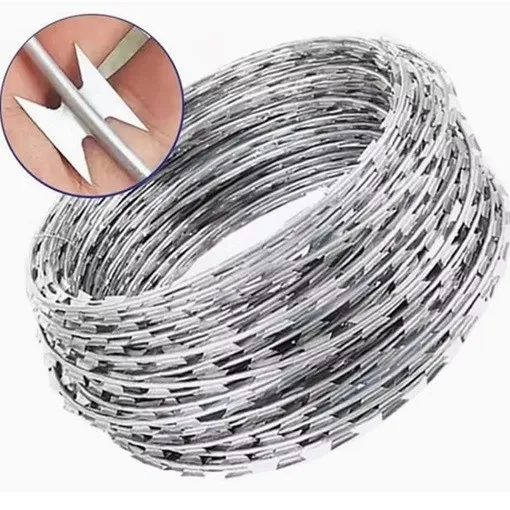
How to Mitigate the Impact of Weather
So, what can you do to protect your straight line razor wire from the elements? First of all, choosing the right type of wire is crucial. If you're in an area with a lot of moisture, Stainless Steel Razor Wire might be a great option. Stainless steel is highly resistant to rust and corrosion, so it can withstand rain, humidity, and even saltwater in coastal areas.
Proper installation is also key. Make sure the wire is installed with enough slack to allow for expansion and contraction due to temperature changes. This will prevent the wire from breaking under stress. And don't forget about regular maintenance. Inspect the wire regularly for signs of damage, such as rust, cracks, or loose connections. If you notice any problems, address them right away to prevent further damage.
Different Types of Razor Wire for Different Weathers
There are different types of straight line razor wire that are better suited for different weather conditions. For example, Concertina Barbed Wire Fencing is a good choice for areas with high winds. Its coiled design makes it more flexible and less likely to be damaged by strong gusts.
If you're in an area with a lot of sunlight, you might want to consider a wire with a special UV - resistant coating. This coating can help protect the wire from the sun's harmful rays and extend its lifespan.
Conclusion
As you can see, weather has a significant impact on straight line razor wire. Whether it's the sun, rain, snow, or wind, each weather condition can pose unique challenges to the wire's integrity and effectiveness. But by understanding these challenges and taking the right precautions, you can ensure that your straight line razor wire remains in good condition and provides reliable security for your property.
If you're in the market for high - quality straight line razor wire that can withstand the elements, I'm here to help. Whether you need Hot Dipped Galvanized Razor Wire, Concertina Barbed Wire Fencing, or Stainless Steel Razor Wire, I've got you covered. Get in touch with me to discuss your specific needs and let's find the perfect solution for your security requirements.
References
- "Corrosion of Metals in Atmospheric Environments" - A research paper on how different weather conditions affect metal corrosion.
- "The Effects of Extreme Weather on Fencing Materials" - A study that analyzes how various weather phenomena impact different types of fencing, including razor wire.


